Nobody likes doing laundry, but somebody, somewhere, loved solving the problem of doing laundry, and thank goodness they did.
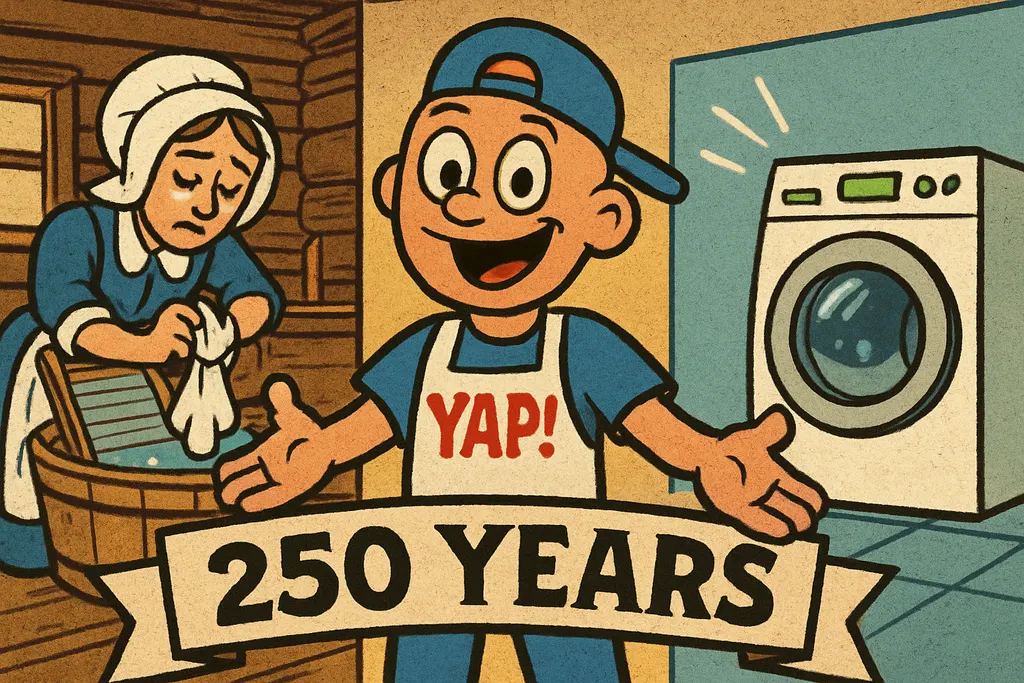
From Washboards to Wi-Fi: How America Learned to Stop Scrubbing
The history of washing machines in America is honestly way more interesting than it has any right to be. It starts, as most great American stories do, with someone being absolutely sick and tired of doing things the hard way. Before any machine existed, laundry was a brutal, full-day ordeal, boiling water, beating fabric against rocks or ridged wooden boards, wringing soaking-wet cloth by hand. It wrecked your knuckles and ate your whole Monday.
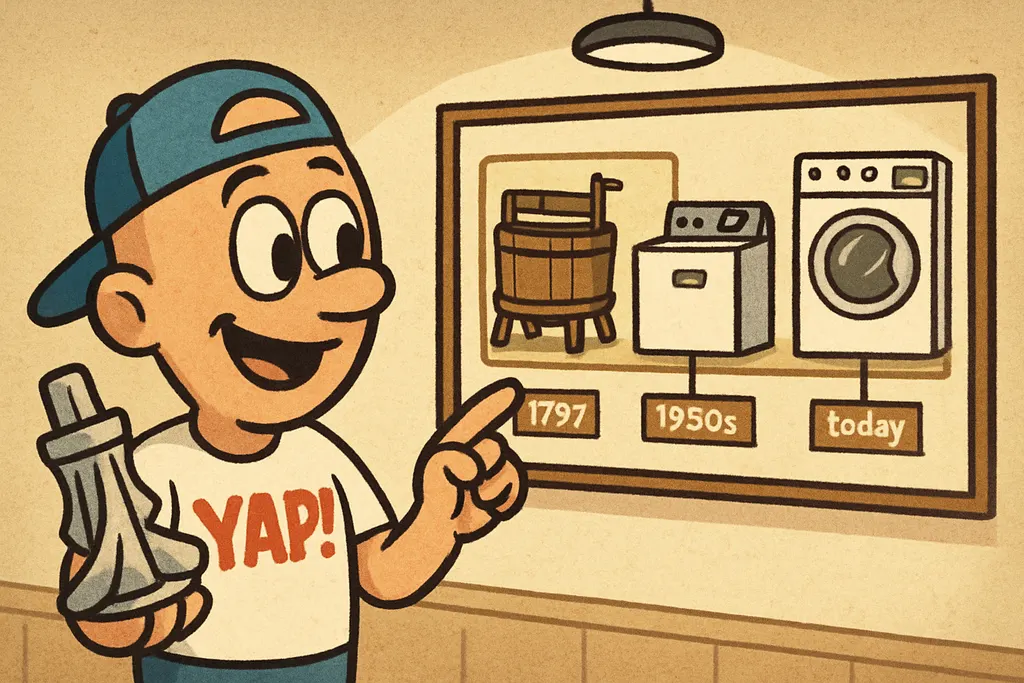
The first American washing machine patent was granted in 1797 to Nathaniel Briggs of New Hampshire. His design was simple, a hand-cranked wooden drum that tumbled clothes through soapy water, but the idea was electric (metaphorically, since electricity wasn't even in the picture yet). The concept of mechanically agitating water and fabric together to loosen dirt? That's the same physics your Maytag or LG is using right now in your laundry room. Briggs didn't know it, but he just laid the foundation for a 250-year dynasty.
For most of the 1800s, washing machine invention was a Wild West of weird ideas, hand-cranked drums, rocker-style boxes, gear-driven paddles. By the late 1800s, steam-powered commercial laundries were everywhere. But the real revolution came around 1908, when Alva Fisher is widely credited with introducing the first electric-powered home washing machine, the Thor. It had an electric motor and a horizontal drum. Your great-great-grandmother probably thought it was sorcery.
The Machine Gets Smart (Slowly, Then All at Once)
From the Thor to the automatic top-loader of the 1940s and 50s, progress was steady but not flashy. The real leap was the automatic cycle, machines that could fill, agitate, drain, and spin without anyone standing over them twisting dials by hand. Brands like Maytag (founded 1893, bro, they've been at this longer than most countries have had cars), Whirlpool, and GE started building household names around reliability and innovation.
Then came the 1990s and 2000s, and suddenly efficiency was the game. High-efficiency front-loaders arrived from Europe and started showing up in American laundry rooms, using dramatically less water and energy than their top-loading predecessors. Control boards replaced mechanical timers. Sensors replaced guesswork. And now? We've got washers that connect to your phone, diagnose their own problems, and send you error codes while you're at the grocery store. The washing machine invention arc, from Nathaniel Briggs cranking a wooden drum in 1797 to a smart washer texting you an F5 E3 code, is genuinely one of the coolest stories in American domestic history.
The Fix: Why All This History Matters to Your Wallet Today
Here's where the YAP Dude gets real with you, fam. All that innovation is amazing, but it also means modern washers are complex machines with a lot of parts that can wear out. The good news: almost every common failure point has a direct replacement part available, and most repairs are totally DIY-able.
Here's a quick timeline of what tends to go wrong, by era of machine:
- Older top-loaders (pre-2000s): The lid switch, the agitator dogs, and the drive belt are the usual suspects. Simple, cheap, very fixable.
- Early automatic washers (2000s-era): Door latches, water inlet valves, and drain pumps are common failures. Still very manageable.
- Modern HE front-loaders: Door boot seals, control boards, and the drain pump filter get all the action. A little more involved, but still DIY-friendly with the right part.
- Latest smart washers: Same as above, but now add "the sensor that triggered that cryptic error code" to the list.
The part names change. The concept doesn't. Something breaks the cycle, you identify the failing component, you replace it, you're back in business.
When to Call YAP vs. DIY
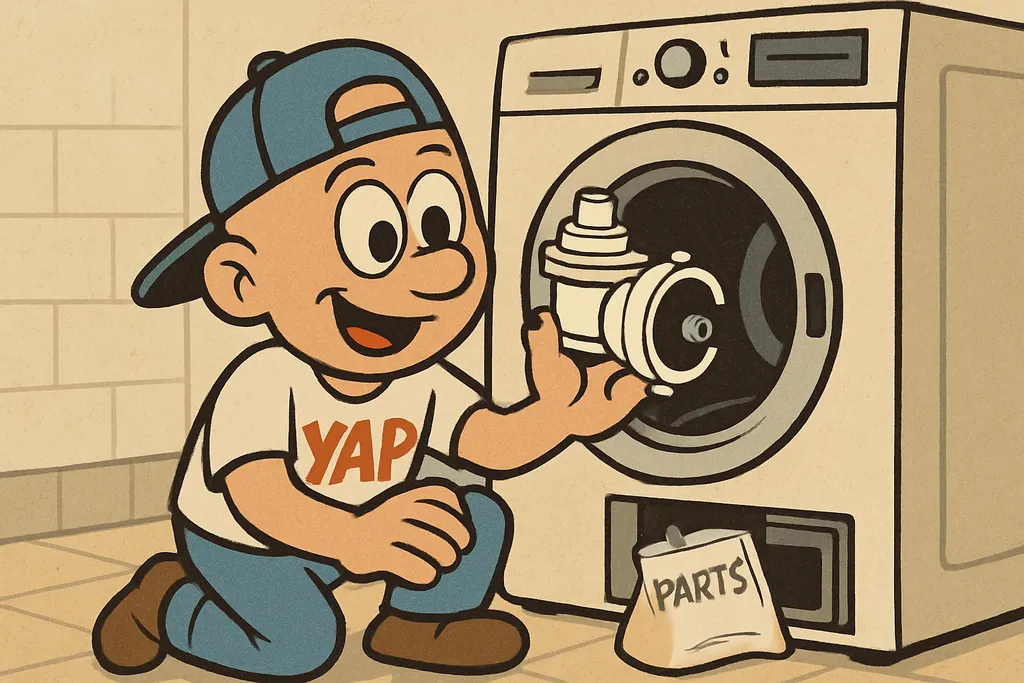
DIY it: If your washer is throwing a known error code, not draining, not spinning, or making a noise it didn't used to make, look up the part, grab it, and get after it. Seriously, most of these repairs are one or two screws and a YouTube video.
Call YAP: If you're staring at a machine that's newer than your car and has more error codes than a NASA shuttle, swing by or give us a ring. We'll help you figure out exactly what part you need so you don't waste money guessing.
Two hundred and fifty years of washing machine history, from Nathaniel Briggs' hand-cranked box to your HE front-loader, is worth celebrating. And we're here to make sure that tradition keeps spinning. Swing by the Piedmont shop or text 405-876-8100 and let's get your machine back in the history books for the right reasons.
Find your exact part.
Tell us your model number and what's broken, we'll match the OEM part, price, and availability in under 5 minutes.
Find My Part →