Your LG dryer is running, tumbling, making all the right sounds, but your clothes are coming out just as wet as they went in, and that D80 airflow error is staring you down from the control panel.
What's Actually Going On
The D80 error code on an LG dryer means the machine is detecting a serious airflow restriction, roughly 80% blockage in your exhaust path. That sounds like a vent problem (and honestly, clean your vent, bro, it's probably a disaster back there), but here's the thing: a totally blocked or kinked duct doesn't just trigger an error code. It also causes the dryer's internal temperature to spike hard, and when that happens, the thermal fuse does exactly what it's designed to do, it blows. Permanently. One and done.
The thermal fuse is a one-shot safety device mounted on the exhaust duct inside the dryer. When temperatures get out of hand, it cuts power to the heating circuit and never resets. So even after you clear the vent situation, the dryer keeps running (the motor and drum don't care about the fuse) but produces zero heat. That's why you're in this exact situation: tumbling clothes, no warmth, D80 code, total confusion.
What most people miss is that the fuse failure and the airflow restriction are the same problem, not two separate ones. If you just replace the fuse without fixing the vent, you'll blow the new fuse inside of a month. Fix both or don't bother.
The Fix
Here's how to handle this the right way. Don't skip steps.
Step 1. Kill the power. Unplug the dryer or flip the breaker. Non-negotiable.
Step 2. Clean the vent system first. Pull the dryer away from the wall, disconnect the exhaust duct, and clear it all the way to the exterior cap. A vent brush kit is like $15 at any hardware store. This is the root cause, treat it like one.
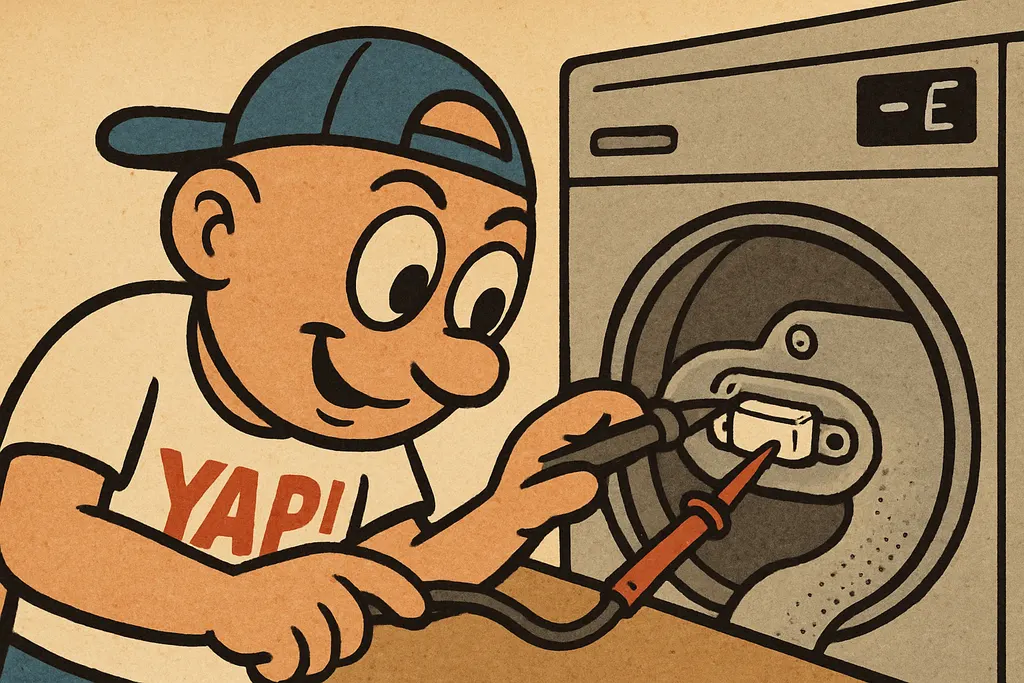
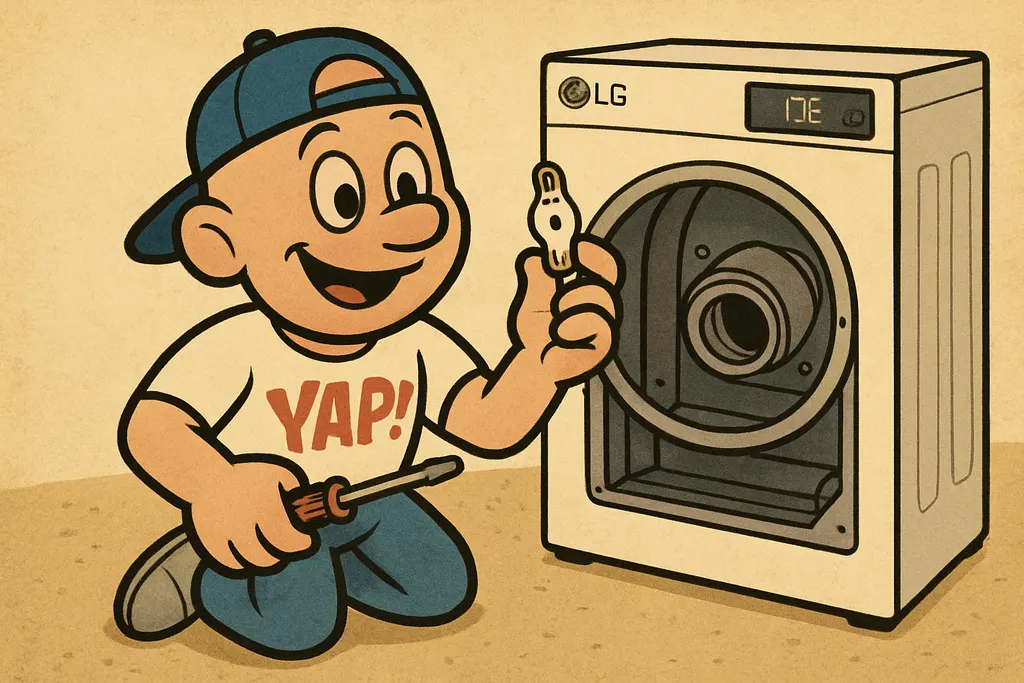
Step 3. Access the thermal fuse. On most LG dryer configurations, you'll remove the back panel (usually 6-8 screws). The thermal fuse 6931EL3003D is a small, white, oblong component mounted directly on the exhaust duct inside the cabinet, with two wire leads connected by push-on terminals.
Step 4. Test it. Set your multimeter to continuity. A good fuse beeps. A blown fuse reads nothing. If it's blown (and it is), move on.
Step 5. Swap it out. Disconnect the two wire leads, remove the one mounting screw, and lift the old fuse out. Seat the new 6931EL3003D in the same position, reattach the screw, push the connectors back on, and button up the panel.
Step 6. Test before you celebrate. Run a timed dry cycle for 10 minutes before you push the dryer back into its cubby. Make sure you've got real heat and that the D80 code doesn't come back.
The part itself, 6931EL3003D, runs right around $15-20, which makes this one of the best DIY wins in the appliance repair world. Total job time is under an hour for most people.
When to Call YAP vs. DIY
DIY this one. Seriously, if you're comfortable with a screwdriver and a multimeter, this repair is a beginner-level job. The part is cheap, the access is straightforward, and you'll feel like a genius when it works.
Call us if you're getting no continuity on the fuse but you also can't confirm the vent is the culprit, there could be a failed heating element or a faulty cycling thermostat also in the mix, and we can help you figure out what else to grab before you make another trip.
We stock 6931EL3003D at the Piedmont shop, so you're not waiting on a week-long shipping window for a $15 part. Swing by or text us at 405-876-8100 and we'll have it pulled and ready.

Part #6931EL3003D, Thermal Fuse
Text us the part number and your model #, and we'll check stock + price for pickup at the counter in Piedmont. No call centers, no hold music.
Text to order →