Your stove is kind of a big deal, and not just because it makes breakfast possible.
What Ben Franklin Actually Built (And Why It Mattered)
Okay, let's set the record straight on a few things. In 1742, Benjamin Franklin, yes, the kite-and-key guy, designed a metal-lined firebox that could heat a room way more efficiently than a traditional open hearth. He called it the Pennsylvania Fireplace. Everyone else called it the Franklin stove. It wasn't a cooking range in the way we think of one today, but it was the first serious rethinking of how Americans used heat inside the home. That's a big deal, fam.
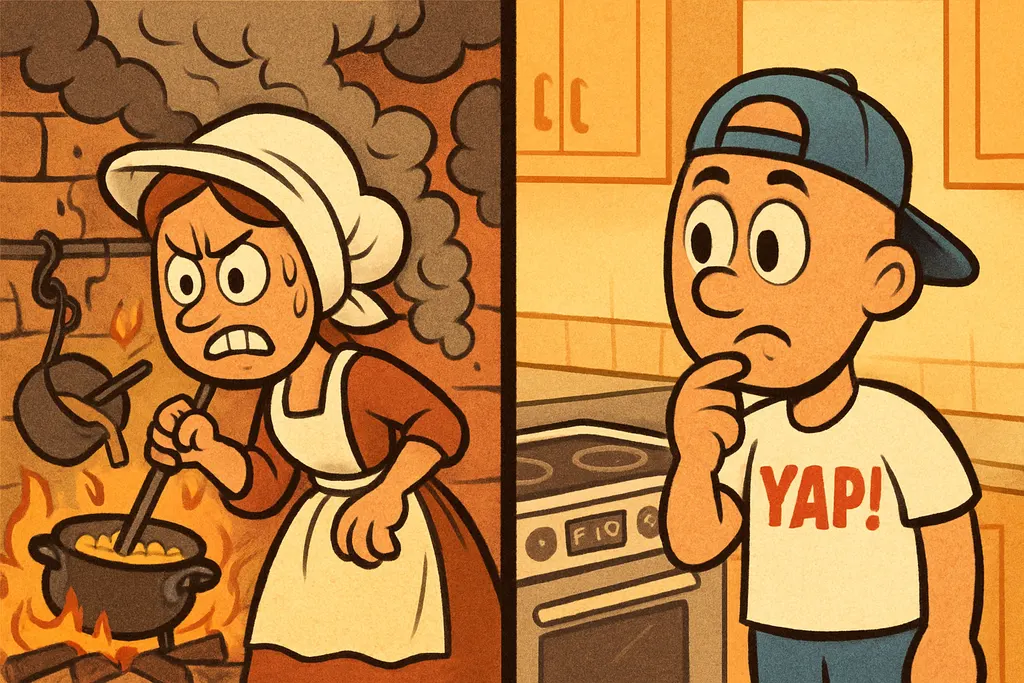
Before Franklin's invention, colonial kitchens were basically organized chaos around an open fireplace. You're talking about swinging iron pots over open flames, burning yourself constantly, and losing most of your heat straight up the chimney. Franklin's metal box changed the physics of the game, it radiated heat into the room instead of sending it all outside. That single idea, contain and redirect heat, is still the core principle behind every gas burner and electric element in a modern American range today.
What's wild is that Franklin refused to patent it. He wanted the design to spread freely. So it did. And for the next hundred years, inventors across the U.S. and Europe ran with that idea in every direction possible.

The Long Road to Your Kitchen Range
The 1800s are where things get really interesting for the history of the stove. Cast iron cook stoves started replacing open hearths in American homes around the 1820s and 1830s. These had enclosed fireboxes, flat cooking surfaces with removable lids, and even early oven compartments. People lost their minds for them, you could finally control heat with something resembling actual precision.
Then came gas. Manufactured "town gas" started piping into urban American homes in the mid-to-late 1800s, and by the early 1900s, gas ranges were the premium option for serious home cooks. No more hauling wood or coal. You turned a valve and had a flame. Revolutionary stuff.
Electric ranges showed up around the same time but took longer to catch on, early electric heating elements were unreliable and kind of a fire hazard, which, hard pass. But by the mid-20th century, electric ranges had leveled up enough to become a legitimate competitor. Today, roughly half of American kitchens run on gas and half on electric, and the debate is still very much alive at every cookout and dinner party in Piedmont, Oklahoma.
The Fix (Or in This Case, the Parts That Keep 250 Years of Innovation Running)
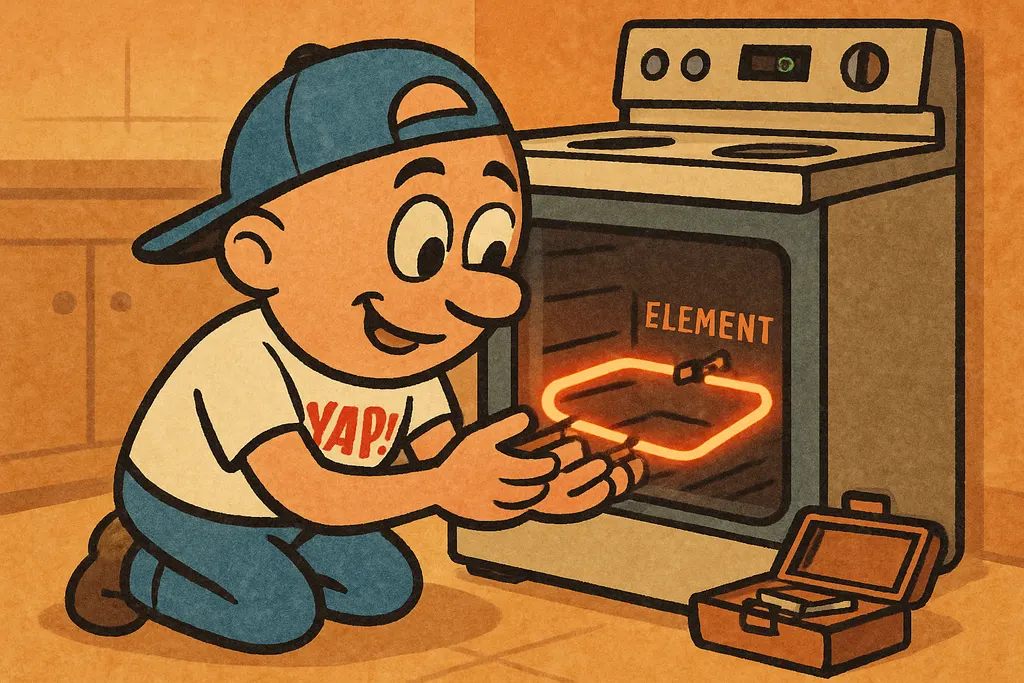
Here's where the YAP Dude gets practical on you. Whether your kitchen has a gas range or an electric range, the parts that fail most often are pretty predictable:
- Gas ranges: burner igniter switches, surface burner caps, and oven ignitors are the big ones. The bake ignitor especially goes out more than people expect.
- Electric ranges: the bake heating element and broil heating element take the most abuse over time. The surface burner receptacle blocks and drip pans are also common replacement items.
- Both types: oven door hinges, door gaskets, temperature sensors, and control knobs wear out regardless of fuel source.
The good news? Most of these repairs are totally DIY-able, and the parts aren't crazy expensive. The bad news is that a lot of people wait too long, bake one more casserole on a broken element, and then something else goes wrong too.
If you know your range's brand and model number, it's usually on a label inside the oven door frame, we can pull the exact part you need at the Piedmont shop. No guessing, no waiting a week for shipping.
When to Call YAP vs DIY
DIY it: Replacing a bake heating element, an oven ignitor, burner caps, drip pans, or knobs. These are beginner-to-intermediate level repairs with basic tools and a YouTube video.
Call YAP first: Anything involving gas line connections or complex control boards. Not because you can't do it, but because a quick call to 405-876-8100 might save you from buying a part you don't actually need.
Benjamin Franklin wanted useful knowledge to be free and accessible to everyone. We're pretty sure he'd approve of a local parts counter that actually explains what's wrong with your oven before selling you something. Swing by the Piedmont shop or text 405-876-8100 and let's keep that innovation streak going another 250 years.
Find your exact part.
Tell us your model number and what's broken, we'll match the OEM part, price, and availability in under 5 minutes.
Find My Part →