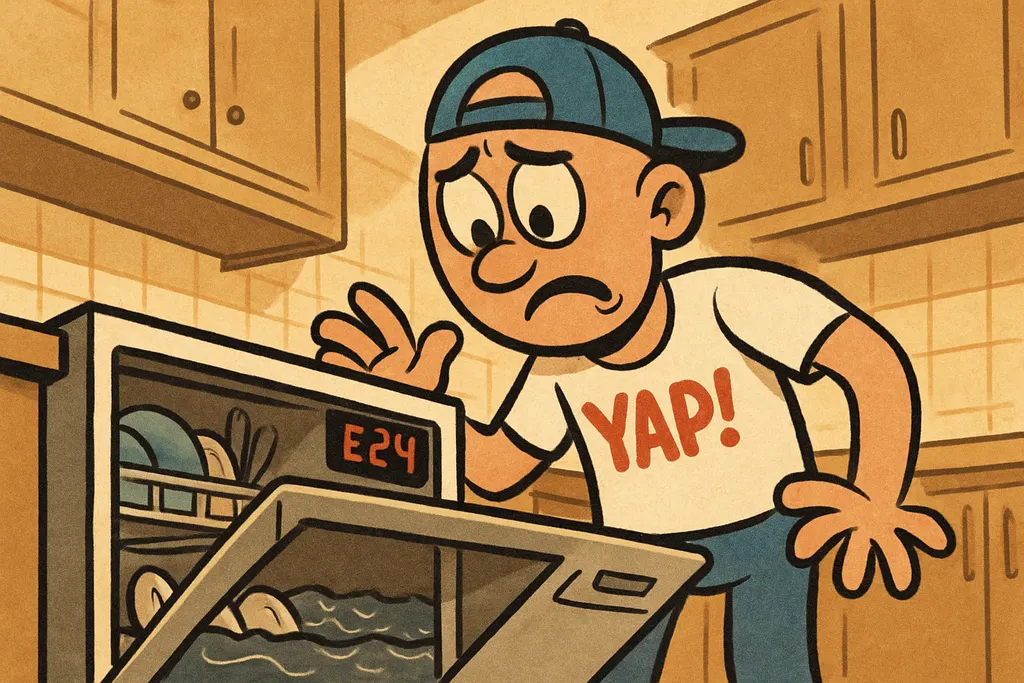
Josephine Cochran didn't set out to change the American kitchen forever, she just wanted her good dishes to stop getting wrecked by careless servants.

What's Actually Going On (Historically Speaking)
Here's the real history of the dishwasher, and it's a lot cooler than you probably learned in school. It's 1886. Josephine Cochran is a well-to-do widow in Shelbyville, Illinois, and she's fed up. Every time her household staff washes her prized china after dinner parties, something chips. She complains. Nothing changes. So she does what any genuinely fed-up person with an engineering brain does, she builds the solution herself.
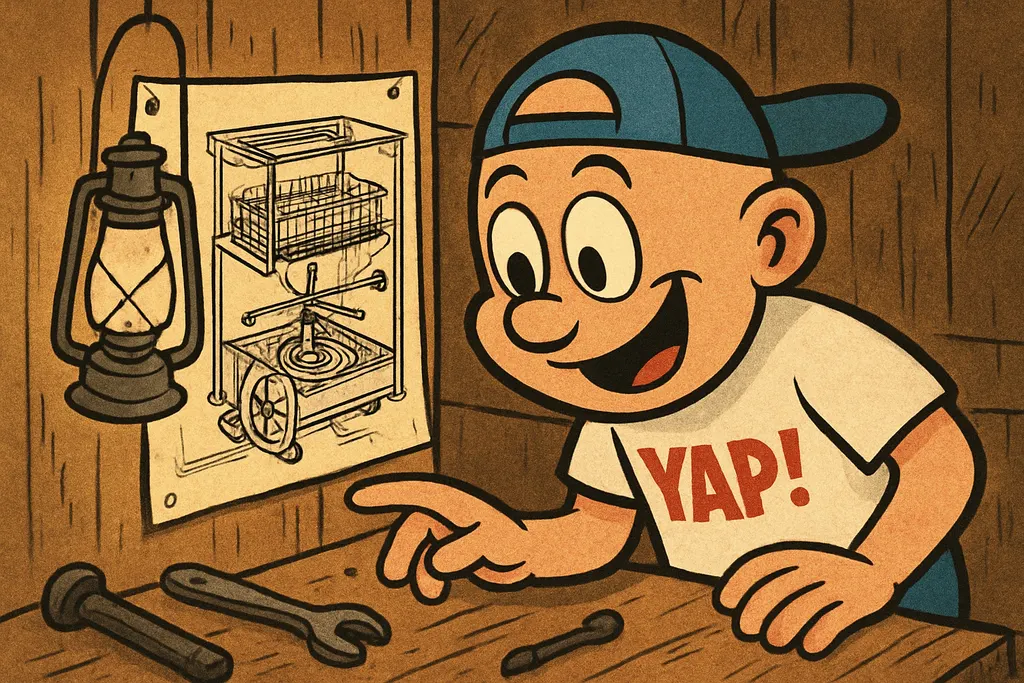
Cochran was not a trained engineer, but she measured her dishes, designed wire compartments to hold each piece securely, and engineered a mechanism that shot hot soapy water over them from below. She built it in a shed behind her house. Let that sink in. The Josephine Cochran invention, what we now recognize as the first practical, motor-driven dishwasher, came out of a backyard shed in small-town Illinois because a woman was simply done tolerating a problem nobody else was solving.
She patented her design in 1886 and debuted it at the 1893 World's Columbian Exposition in Chicago, where it won the highest award for "best mechanical construction, durability, and adaptation to its line of work." Hotels and restaurants immediately wanted in. Regular households took a few more decades to catch up, mostly because running hot water wasn't standard in American homes yet. But the machine worked. Her company eventually became part of KitchenAid. You've heard of KitchenAid, right?
The Fix (How Her Design Became What's Under Your Counter Today)
Cochran's original concept is shockingly close to what modern dishwashers still do. Here's the straight line from 1886 to your kitchen in 2024:
- Rotating spray arms, Cochran used water pressure to spray dishes from below. Modern dishwashers use upper and lower spray arms doing the exact same job, just more refined.
- Dish racks with compartments, She wire-framed individual slots for each piece of china. Today's removable dish racks are a direct descendant of that idea.
- Hot water + detergent cycle, Her machine used hot soapy water. Modern machines use a wash pump to circulate hot water and detergent, then a drain pump to clear it.
- A motor doing the labor, She motorized it. Every dishwasher you touch today runs on that same core principle: let a machine do the gross work.
The parts that fail on modern dishwashers, the wash pump, the drain pump, the spray arms, the door latch, the water inlet valve, all exist because Cochran's original design was complex enough to need them. When your dishwasher stops draining or starts leaving food on your glasses, you're dealing with a descendant of her exact engineering decisions. Pretty wild, honestly.

When to Call YAP vs. DIY
DIY it: If your dishwasher is leaving residue, not draining, or making a grinding noise, there's a very good chance it's a single replaceable part, the drain pump, spray arm, or water inlet valve. These are legitimate DIY repairs with the right part in hand.
Call YAP: If you're not sure which part is failing, swing by or call us. We'll walk you through the symptoms and get you the right component without guessing, because ordering the wrong part twice costs more than just asking first.
Josephine Cochran built her machine to last and to work. The least we can do is keep yours running. Whether your dishwasher is a KitchenAid (her legacy, literally), a Bosch, a Whirlpool, or anything else, we stock the parts to fix it right. Swing by the Piedmont shop or call/text 405-876-8100, we'll treat your appliance with the same respect Josephine had for her china.
Find your exact part.
Tell us your model number and what's broken, we'll match the OEM part, price, and availability in under 5 minutes.
Find My Part →