If you've ever spotted a Maytag Neptune at an estate sale or in someone's basement and thought "what is that thing", you're not alone. That washer doesn't look like anything else from its era, and there's a real story behind why.
What's Actually Going On
The Maytag Neptune launched in 1997, and it was a big swing. Maytag wanted to crack the American front-load washer market at a time when front-loaders were basically unheard of in U.S. homes. Top-loaders ruled everything. Agitators, full tubs, the whole deal. So Maytag needed a machine that didn't just work differently, it needed to look different enough that people would actually stop and reconsider how they did laundry.
The industrial design work on the Neptune is credited to teams working under Maytag's internal design and engineering programs of the mid-90s, with outside design influence shaping its bold porthole door, the rounded cabinet corners, and that distinctly futuristic front panel. The look drew obvious inspiration from European front-load washers that were already common across the Atlantic. But Maytag Americanized it, bigger capacity, bolder proportions, and that unmistakable circular door window front-and-center like it was daring you to watch your laundry spin.
The Maytag Neptune design wasn't just cosmetic flex either. The front-load configuration drove real engineering decisions: no central agitator meant gentler fabric care, tumble-wash action, and dramatically lower water usage. The aesthetic and the function were actually talking to each other, which is rarer than you'd think in appliance history.

The Fix (Or in This Case, the Full Picture)
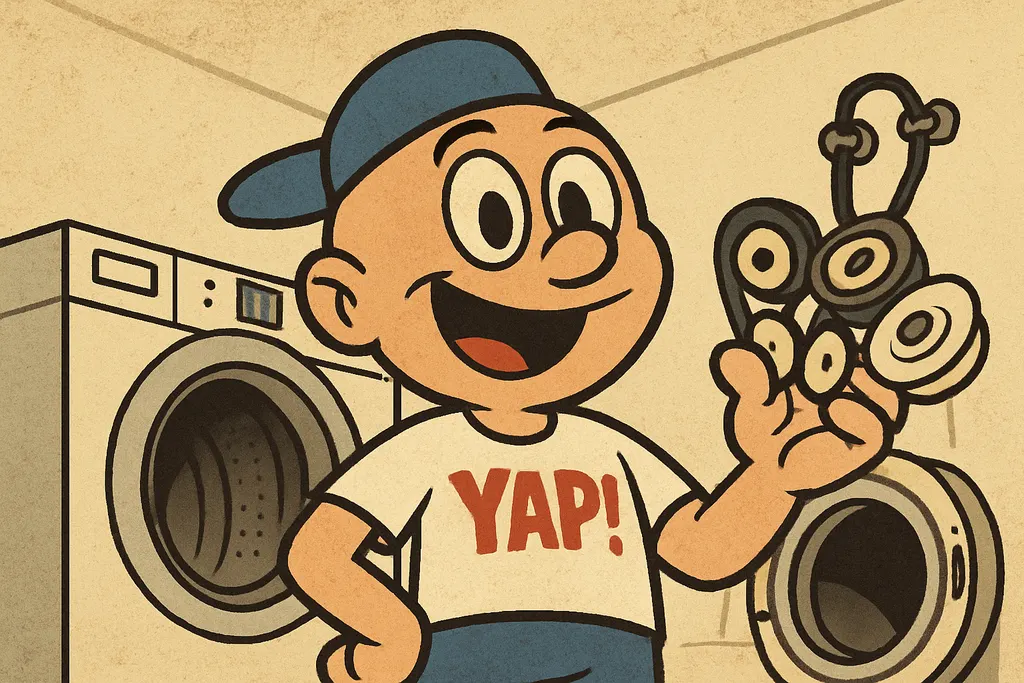
There's no single part to swap to "fix" a Neptune's iconic look, but if you own one and want to keep it running, here's what you're actually dealing with under that bold shell:
- The door boot seal is the number one wear item on any front-loader. If yours is cracked or moldy, that's your first call to us.
- The door latch assembly takes a beating every single cycle. If the door won't lock, the machine won't run, simple as that.
- The pump handles drainage, and on the Neptune it's tucked in tight. Not a nightmare to replace, but you want the right part the first time.
- Control board components, the Neptune's futuristic panel had electronic controls that were ahead of their time for 1997, which also means they aged in interesting ways. Some boards are still sourceable.
- Bearings and drum seals, these are the "is it worth it?" repair on an older Neptune. Call us and we'll give you a straight answer.
Prices vary by part, and availability on a machine this age can be hit or miss, which is exactly why you call a shop that actually digs for this stuff instead of just telling you to buy a new washer.
When to Call YAP vs. DIY
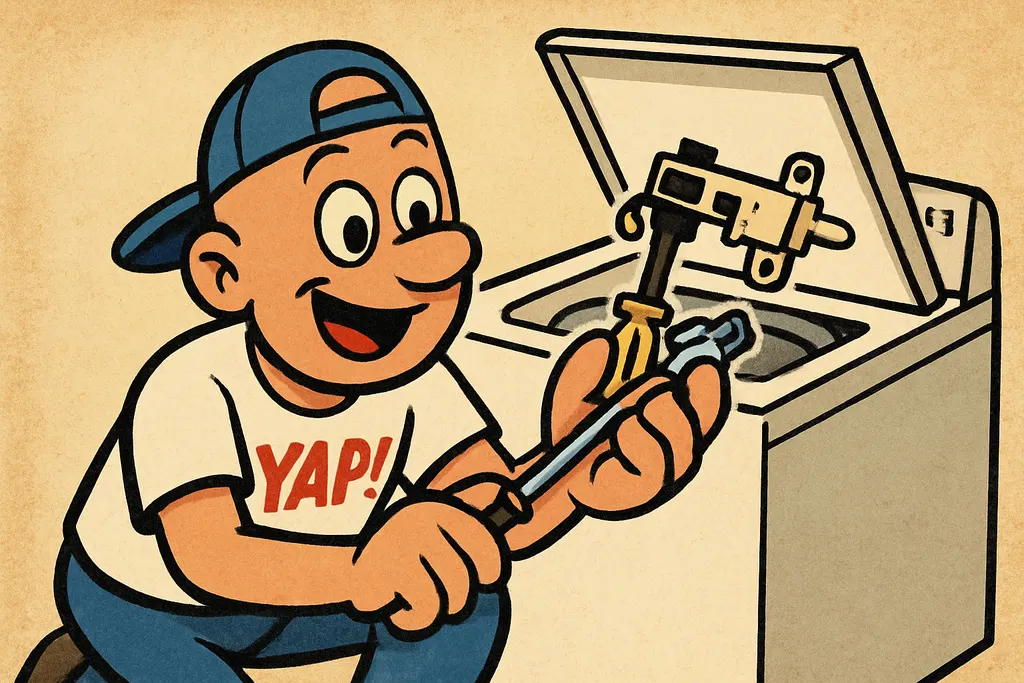
DIY it: Door boot seal, door latch, pump, all reasonable projects if you're comfortable pulling the front panel and following a teardown guide. We'll get you the part.
Call YAP: If you're chasing an electrical issue or you're not sure which component actually failed, don't throw parts at it blind. Hit us up at 405-876-8100 and we'll help you narrow it down before you spend anything.
The Maytag Neptune design was genuinely ahead of its time, and a lot of these machines are still out in the wild holding up surprisingly well. If yours is one of them, it deserves better than a trip to the curb. Swing by the Piedmont shop or text 405-876-8100, we'll see what we can do for you.
Find your exact part.
Tell us your model number and what's broken, we'll match the OEM part, price, and availability in under 5 minutes.
Find My Part →