Nothing says "Happy Thanksgiving" like a cold oven, a raw turkey, and the slow realization that you absolutely should not have run the self-clean cycle last night.

What's Actually Going On
Here's the thing about Thanksgiving oven problems, most of them aren't random bad luck. They're a very specific kind of self-inflicted chaos that plays out in kitchens all across Oklahoma every single November. The self-clean cycle is the biggest offender. It runs your oven up to around 900°F to incinerate every drip and splatter from the past year, and that extreme heat puts serious stress on internal components. The most common casualty? The thermal fuse.
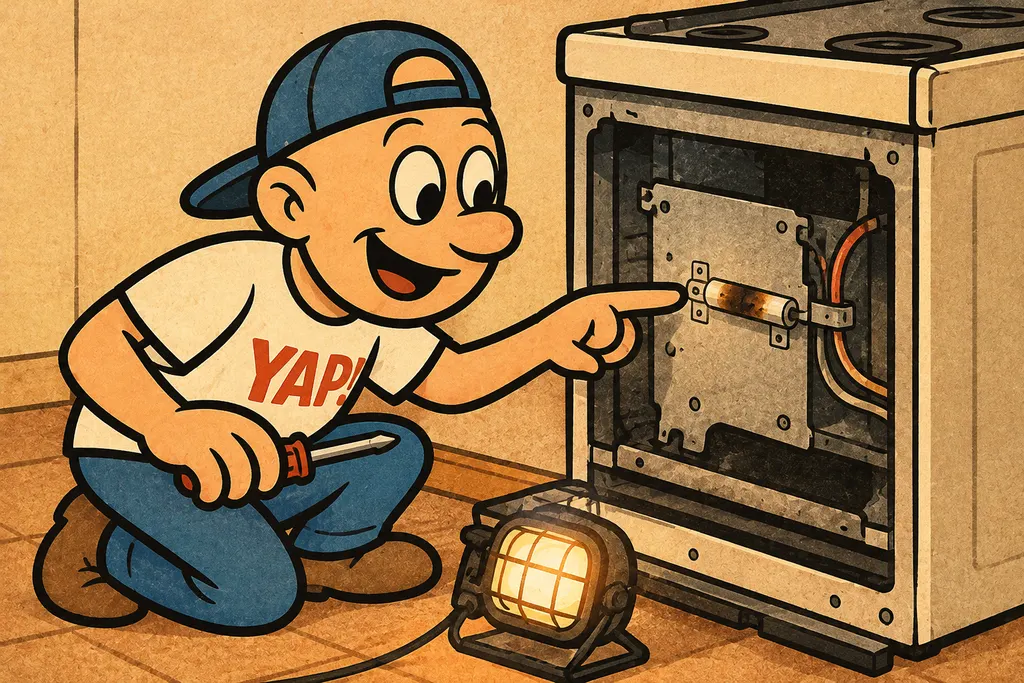
The thermal fuse is a small, inexpensive safety device, usually tucked near the back of the oven cavity or behind the control panel, and its entire job is to blow when the oven gets dangerously hot. It's the sacrifice play. It trips, cuts power to the heating elements, and saves you from a fire. Noble, honestly. But when it blows the night before Thanksgiving, you're not feeling very grateful. Your oven will power on, the clock might even work, but the oven itself will not heat. At all. You'll preheat to 350°F and wait forever and nothing will happen. That turkey is just sitting there. Getting more raw by the minute.
The other classic Thanksgiving oven disaster is the door that won't unlatch after self-clean. The oven locks the door automatically during the cycle, and sometimes the latch mechanism sticks or the thermal sensor that tells it to unlock just gives up. You'll have a perfectly locked oven with zero access and a holiday crowd arriving in three hours. Truly elite chaos.
The Fix
Good news: a blown oven thermal fuse is one of the more DIY-friendly repairs out there if you're comfortable with basic tools. Here's the general path forward:
- Confirm the diagnosis. If your oven powers on but refuses to heat, and you ran self-clean recently, a blown thermal fuse is the leading suspect. A multimeter set to continuity will confirm it, the fuse should show continuity when it's healthy. If it reads nothing, it's blown.
- Pull the oven away from the wall and unplug it. Always. No exceptions.
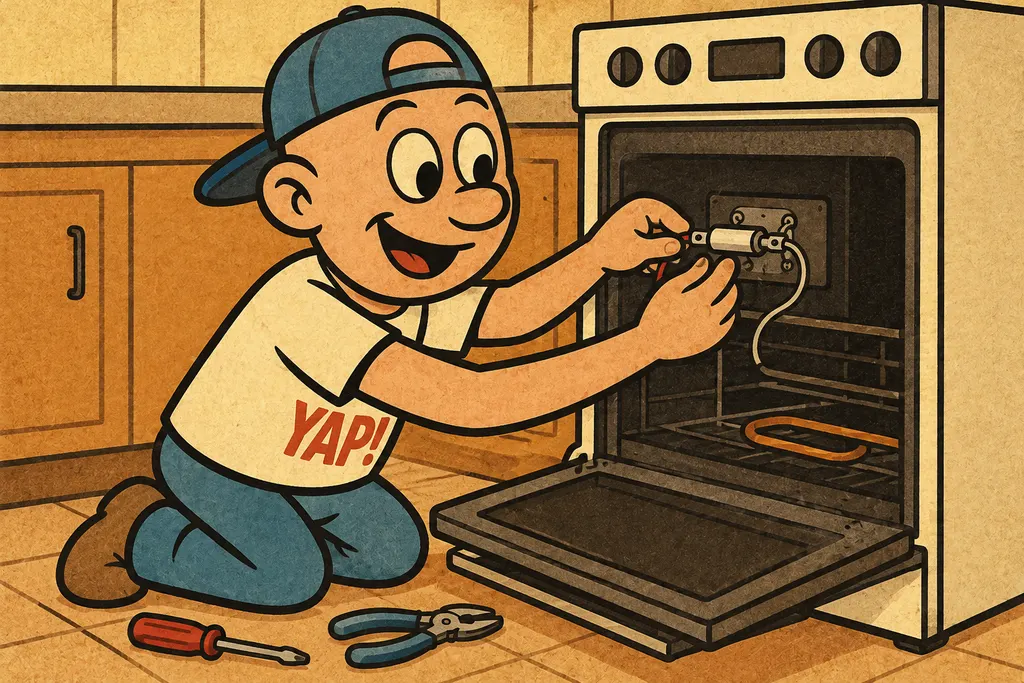
- Access the fuse. Depending on your brand and model, you'll either remove the back panel or the control console to reach it. A thermal fuse is a small cylindrical or capsule-shaped component with two wire leads, not glamorous, but mighty important.
- Replace it with the correct fuse for your model. This is where you need to be specific. Fuses vary by temperature rating and connector type. Bring your model number to us and we'll pull the right one. Prices on these are usually quite reasonable, we're talking a low-cost repair, not a service call invoice.
- Reassemble, plug in, and test. Set your oven to 350°F and actually confirm heat before you assume it's fixed.
When to Call YAP vs. DIY
DIY this one if you've got a multimeter, a screwdriver set, and your model number handy, a thermal fuse replacement is beginner-to-intermediate territory and genuinely worth trying before you call a tech.
Call YAP first if you're not sure what failed, if the oven still won't heat after replacing the fuse, or if you're staring down a holiday appliance disaster with less than 24 hours on the clock and need someone to just tell you exactly what to grab. That's literally what we're here for.
Swing by the Piedmont shop or text 405-876-8100, we keep common thermal fuses in stock and we can help you match the right part to your model fast. Don't let a $15 fuse ruin your Thanksgiving, fam.

Find your exact part.
Tell us your model number and what's broken, we'll match the OEM part, price, and availability in under 5 minutes.
Find My Part →