Your Whirlpool microwave fires up, the turntable spins, the light comes on, the fan runs, but nothing heats, and there's this low, angry hum that definitely wasn't there before.
What's actually going on
Inside every microwave is a high-voltage circuit that does something wild: it takes your standard 120-volt household current and pumps it up to somewhere around 2,000 volts to power the magnetron, the actual component that generates the microwaves that heat your food. That circuit has three main players: the high voltage transformer, the high voltage capacitor, and the high voltage diode. The diode's job is to act like a one-way valve for electricity. It converts the alternating current coming out of the transformer into direct current that the magnetron can actually use. No diode, no magnetron. No magnetron, no heat.
When the diode fails, it usually fails shorted or open. Either way, the magnetron stops getting what it needs, and you get that loud hum, the transformer is still working hard, but the energy has nowhere useful to go. The symptom pattern is almost always identical: microwave loud hum, no heat, everything else functioning normally. Turntable? Spinning. Light? On. Interior fan? Running. That combination, especially with the audible hum cranking up louder than usual, points straight at the high-voltage diode as the primary suspect.
The good news is that the diode itself is a cheap part. We're usually talking somewhere in the $10, $20 range depending on the specific Whirlpool model. That's the whole reason this one stings, a two-dollar part (functionally speaking) is keeping you from heating your leftovers. The bad news is where the part lives.
The fix, and why this one belongs to a tech
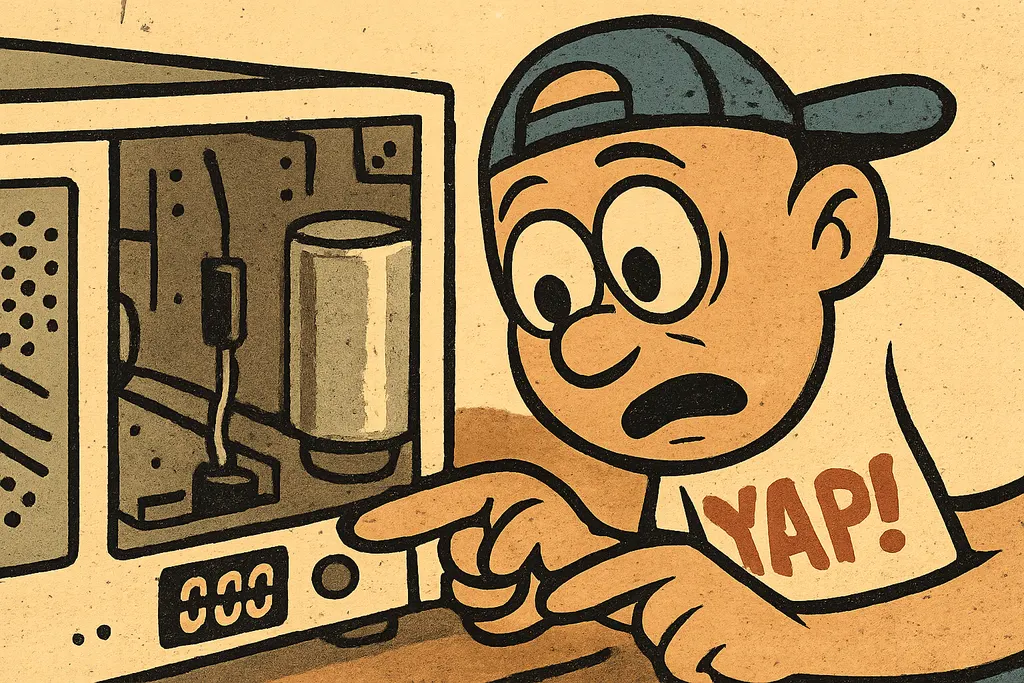
Here's the part we have to be real with you about. The high voltage diode sits right next to the high voltage capacitor, and that capacitor is not your friend. It stores an electrical charge, typically around 2,100 volts, and it holds that charge even after the microwave is unplugged. That's not a "be careful" situation. That's a "people have died from this" situation. A tech confirms the diode is bad by:
- Unplugging the unit and waiting, then discharging the capacitor safely using an insulated discharge tool before touching anything in the high-voltage section.
- Removing the diode from the circuit and testing it with a multimeter set to the diode-check setting. A good diode allows current to flow in one direction and blocks it in the other. A shorted diode reads continuity in both directions. An open diode reads nothing in either direction.
- Visually inspecting the diode for burn marks, cracking, or carbon scoring, a shorted diode will often show physical damage.
- Confirming the capacitor itself tests within spec before closing everything back up, since a bad diode can sometimes stress the capacitor.
If the diode tests bad, swapping it out is straightforward for someone who knows how to safely discharge and handle the high-voltage section. The part snaps into place, the connections are simple, and the repair takes maybe 20 minutes once the cabinet is open. But that discharge step is not optional and not skippable, and it's the whole reason we don't hand this one off as a casual DIY job.

When to call YAP vs DIY
Call a tech on this one. The microwave high voltage diode test is simple; the environment that part lives in is genuinely dangerous. If you're an experienced appliance tech or have done high-voltage capacitor discharge work before, you already know the drill, come grab the part and go.
DIY-friendly only if you have a verified discharge procedure, proper insulated tools, and you've done this before. This isn't the repair to learn on.
We stock high voltage diodes for Whirlpool microwaves at the shop in Piedmont. The part is inexpensive, usually in stock same day, and if your tech needs it fast, we're your people.
Swing by the Piedmont shop or text 405-876-8100 and we'll get you the right diode for your specific Whirlpool model, just have your model number ready and we'll take it from there.

Find your exact part.
Tell us your model number and what's broken, we'll match the OEM part, price, and availability in under 5 minutes.
Find My Part →