Moving a refrigerator sounds simple until you fire it up at the new place and it never gets cold, congrats, you just cooked the compressor.
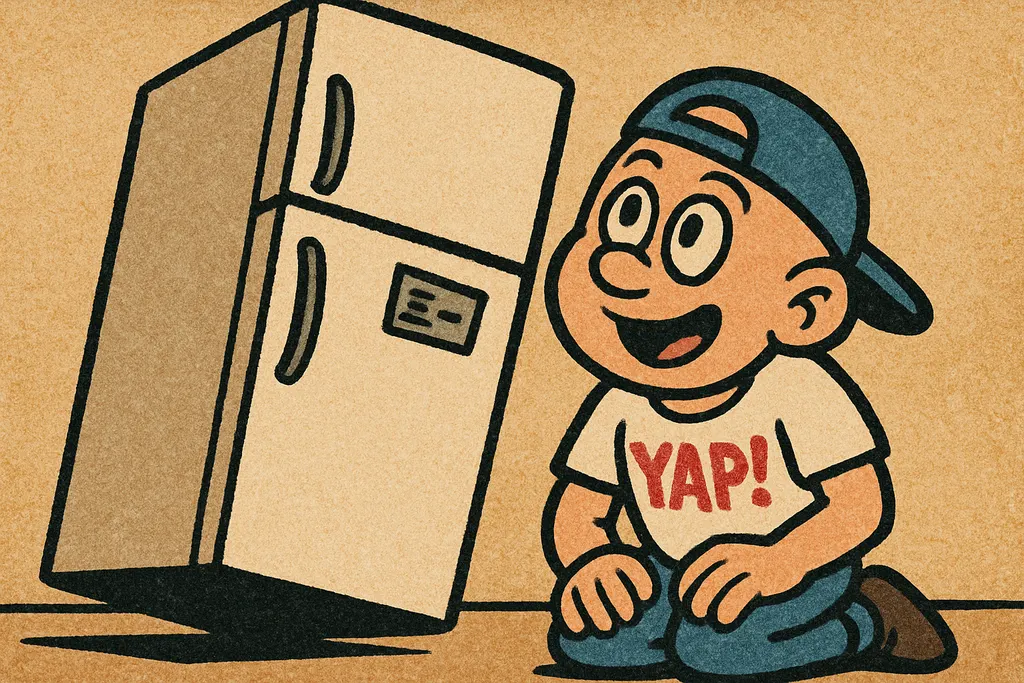
What's actually going on inside that compressor
Here's the thing most people don't know: your fridge's compressor sits in an oil bath. That oil lubricates all the moving parts inside the compressor while it runs. When you tip the fridge on its side, or even at a steep angle, that oil migrates out of the compressor and into the refrigerant lines where it has absolutely no business being.
It doesn't drain back instantly. It can take anywhere from a couple of hours to a full day for that oil to gravity its way back down into the compressor reservoir, depending on how long the fridge was tilted and at what angle. Plug it in too early and the compressor spins up dry, overheats, and seizes. That's a dead refrigerator, fam. Not a "needs a small part" situation, a full compressor replacement situation, which can run $300, $600 in parts alone before anyone touches a screwdriver.
The rule of thumb is simple: the longer it was on its side, the longer you wait before plugging it in. Tipped for 30 minutes? Wait at least 2 hours upright. Tipped for the whole 4-hour drive across town? Give it 24 hours. Some manufacturers actually say 24 hours no matter what, and honestly that's solid advice.
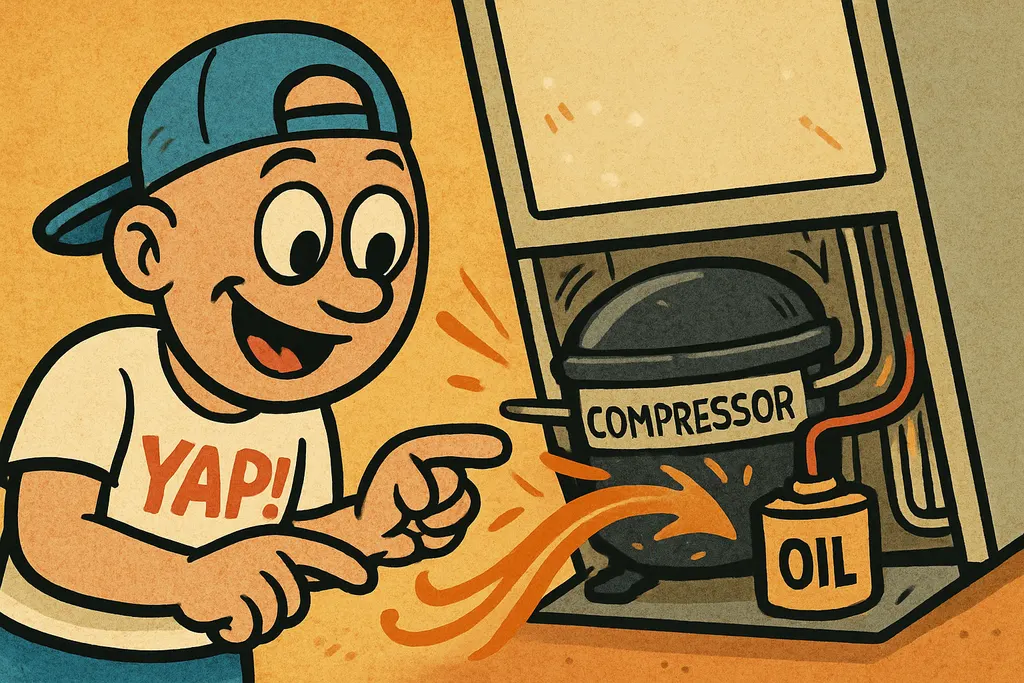
The fix, or better yet, how to avoid needing one
Follow this moving checklist and you'll roll into the new place without a refrigerator compressor damage nightmare:
- Empty and defrost the fridge completely before moving day. Ice and water sloshing around is a secondary headache you don't need.
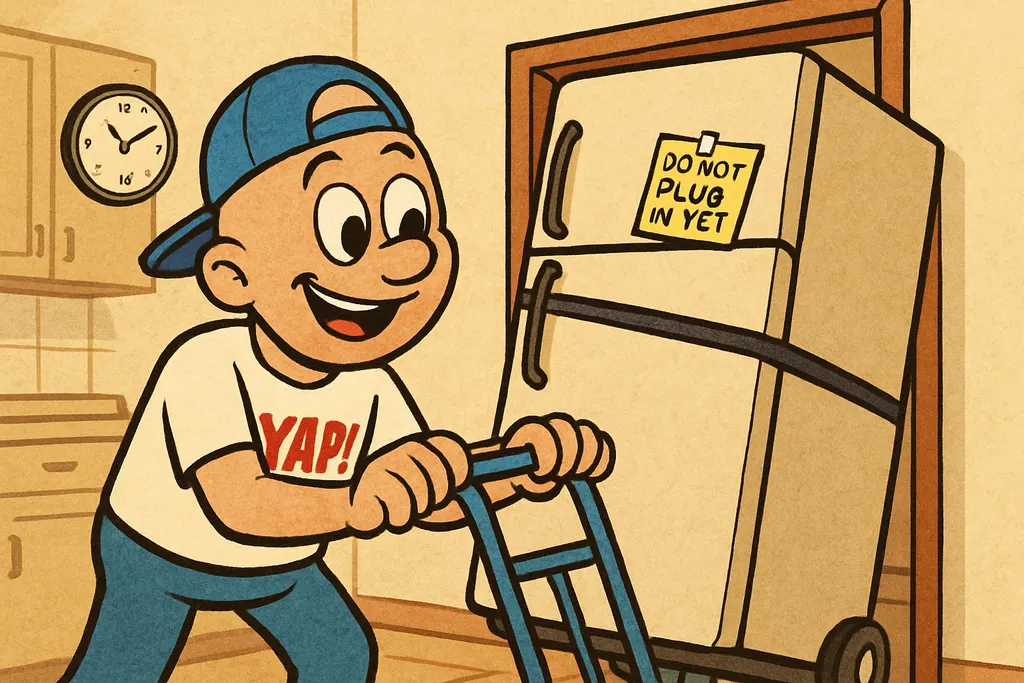
- Keep it upright whenever possible. Use an appliance dolly with straps. This is non-negotiable for moving a fridge safely, upright transport keeps that oil exactly where it needs to be.
- If you must tilt it, angle it toward the compressor side (usually the back), not away from it. Check your owner's manual for the manufacturer's preferred tilt direction. And minimize tilt time, seconds, not minutes.
- Secure it in the truck so it can't tip. Straps front and back. Seriously, don't let it free-roam in a moving truck on the highway.
- Once it's at the new place, stand it upright immediately and leave it there. Don't plug it in. Go unpack boxes. Eat a sandwich. Wait.
- Wait the full recommended time, 2 hours minimum, 24 hours if it was on its side for any significant stretch.
- Then plug it in and listen for the compressor to kick on. Give it a full hour before you panic about temperature.
If you skipped some of these steps and your fridge is now running but not cooling, that compressor may already be in trouble. Sometimes you get lucky and it just needs time. Sometimes it doesn't.
When to call YAP vs. DIY
DIY this one: The prevention side is 100% on you, no part needed, just patience and a good dolly. If you followed the steps and everything's working, you're golden.
Call YAP: If the fridge is running but not cooling after 24 hours post-move, or if you're hearing grinding or clicking from the back of the unit, the compressor may be toast or there could be a related issue, a start relay, for instance, is a cheap fix that mimics compressor failure and is worth ruling out first. Swing by the shop and describe the symptoms before you assume the worst.
Honestly, compressor jobs are serious business. We can help you identify whether it's actually the compressor or something less painful on your wallet. Give us a call at 405-876-8100 and let's figure it out before you start replacing parts that don't need replacing.
Whether you're prepping for a move or already dealing with a no-cool fridge after one, swing by the Piedmont shop or text 405-876-8100, we'll point you in the right direction and get you the right part if you need it.

Find your exact part.
Tell us your model number and what's broken, we'll match the OEM part, price, and availability in under 5 minutes.
Find My Part →